
Well Pump Repair Yuma AZ
You turn the spigot and nothing comes out. The pressure gauge reads zero. In the 115-degree Yuma heat, you have hours before livestock suffers and swamp coolers run dry. We deploy our heavy trucks, diagnose the electrical fault, and pull dead iron out of the dirt.
Request Emergency Pump Service
Direct line to our service team. No sales fluff.
The Brutal Reality of Yuma Heat on Machinery
You wake up, turn on the shower, and the lines are dead. A fast walk out to the pump house confirms the worst. The pressure gauge is pinned at zero. You hear a repetitive, mechanical clicking coming from the electrical box, but the heavy vibration of water pulling from the aquifer is gone. This is a total system failure. Operating in Yuma, AZ 85364 means your mechanical equipment is subjected to some of the most extreme environmental conditions on the continent. During July and August, the ambient temperature inside a steel pump house can easily eclipse 140 degrees. That heat bakes wiring, boils the dielectric fluid inside capacitors, and systematically destroys surface control components.
When you need well pump repair Yuma AZ properties require an immediate, heavy-duty mechanical response. You do not have days to wait for parts to be shipped. Evaporative coolers shut down, household plumbing ceases to function, and agricultural assets begin to die. We execute 24/7 pump service Yuma residents rely on to restore heavy water flow before the desert heat does permanent damage to their property.
Step 1: Surface Electrical Diagnostics

We do not guess, and we do not instantly tear the wellhead apart. Proper water pump troubleshooting always begins at the electrical source. A dead pump is often a symptom of a blown surface component rather than a failed downhole motor.
Our technicians start at the main breaker panel, checking for 230 volts across the legs. If the breaker is tripped, we do not simply reset it and walk away. A tripped breaker indicates a massive amp draw—a sign that the motor is locked up or there is a dead short in the system. We move to the control box mounted near the pressure tank. We open the panel and inspect the start capacitors, run capacitors, and potential relays.
In the extreme Yuma heat, start capacitors are notorious for swelling, leaking, and violently rupturing. If the capacitor fails, the motor down the hole cannot generate the initial torque required to spin the heavy brass impellers against a static column of water. You will hear the relay click, the motor will hum as it pulls locked-rotor amps (LRA), and the overload protector will violently trip to prevent an electrical fire. We test every capacitor with a multimeter to ensure it holds the correct microfarad rating. If the control box is scorched, we rip it out and wire in a heavy-duty replacement.
Step 2: Megging the Submersible Motor
If the surface voltage is correct, the control box is functioning, and the pressure switch is engaging, the failure lies underground. Before we bring in the heavy equipment to pull the pump out of the casing, we interrogate the motor electrically from the surface.
We disconnect the submersible drop wire from the control box and hook up a megohmmeter (a "Megger"). This specialized diagnostic tool sends 500 to 1,000 volts down the insulated wire to the motor sitting hundreds of feet underwater. We are testing the insulation resistance of the copper windings inside the motor stator. If the needle on the Megger drops to zero ohms, we have confirmed a dead short to ground. The protective casing on the motor has ruptured, water has breached the sealed electrical chamber, and the windings have melted together. The motor is permanently dead. At this point, the pump must be mechanically extracted.
The Extraction: Pulling Heavy Iron
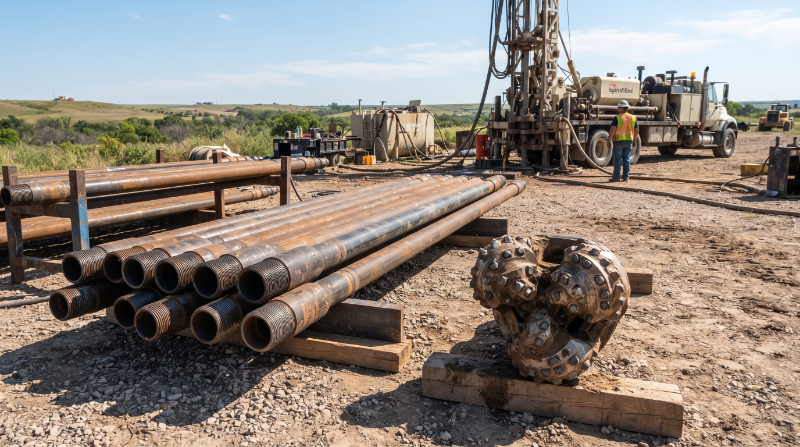
Pulling a submersible pump in Yuma County is not a job for amateurs pulling rope by hand. We are dealing with hundreds of feet of schedule 120 PVC drop pipe or heavy galvanized steel column pipe, completely filled with a static column of water, with a 50-to-100-pound brass and stainless steel pump hanging off the bottom. A typical 300-foot residential pump extraction involves hoisting well over 800 pounds of dead weight directly up a 6-inch casing.
We back our specialized pump hoist trucks directly over the wellhead. We uncap the casing, thread a T-handle into the brass pitless adapter, and break the mechanical seal holding the drop pipe to the discharge line. The hydraulic derrick takes the load, and we pull the pipe out in controlled sections. As the pipe comes up, our technicians inspect every single inch of the jacketed 10/3 submersible wire. We are looking for chafe marks. Every time a pump kicks on, the massive torque causes the entire pipe string to violently twist and slap against the inside of the casing. If the original installers failed to secure heavy-duty torque arrestors and wire standoffs, that twisting action will rub the insulation completely off the wire until the bare copper touches the steel casing, instantly shorting out the motor. If we find wire damage, we cut it out, install heavy-wall waterproof heat-shrink splice kits, and correctly install torque arrestors before setting the new pump.
Downhole Mechanical Failures
Sometimes the motor tests fine, but the pump still refuses to move water. This points to catastrophic mechanical failure of the wet end—the stack of impellers and diffusers that actually physically lift the water.
Abrasive Sand IntrusionWet-End Wear
The alluvial geology of the Yuma Valley and Fortuna Foothills is heavily loaded with fine, abrasive sand. If a well screen degrades or the gravel pack shifts, the pump begins sucking sand directly into the intake. Sand acts like liquid sandpaper. As the pump spins at 3,450 RPMs, the sand machines the edges of the brass or thermoplastic impellers down to nothing. The motor spins perfectly, but the impellers are gone. The pump runs continuously but cannot generate enough lift to push the water to the surface.
Drop Pipe BlowoutsPressure Loss
Another common mechanical failure is a hole rubbed directly through the drop pipe below the static water line. The pump turns on, generates massive pressure, but instead of pushing the water 200 feet up to your house, the pressurized water violently sprays out of the hole in the pipe and bleeds right back down the casing. You will hear water running down the well, but your pressure gauge at the surface will never rise above 10 PSI. We replace damaged drop columns with heavy-duty threaded schedule 120 PVC to handle the extreme torque and pressure of deep Yuma wells.
The Pressure Tank: The Silent Pump Killer

A massive percentage of premature pump failures are caused by surface components, specifically the pressure bladder tank. The steel tank in your pump house contains a heavy rubber bladder that holds a compressed air charge. Because water cannot be compressed, this air charge acts as a shock absorber for your entire plumbing system.
In the Yuma heat, these rubber bladders degrade, dry rot, and rupture. When the bladder blows, the tank fills entirely with water—a condition known as being "waterlogged." Without the compressed air cushion, every single time you flush a toilet or wash your hands, the system pressure drops instantly to zero. The pressure switch slams shut, the 230-volt motor kicks on, the pressure instantly spikes to 60 PSI, and the pump shuts off. Two seconds later, it drops to zero and kicks on again.
This rapid short-cycling forces the motor to start and stop thirty times a minute. Starting a submersible motor generates massive heat in the copper windings. The motor relies on long, steady run times to allow the surrounding water to cool the casing. Short-cycling causes terminal heat buildup, melting the motor in a matter of days. We diagnose a waterlogged tank by checking the Schrader air valve on the top. If water spits out instead of air, the tank is dead. We rip it out and plumb in a high-capacity replacement, dial in the air pre-charge to exactly 2 PSI below the switch cut-in pressure, and save your new pump from immediate destruction.
Rapid Field Response. Heavy-Duty Execution.
A dead well pump is an active emergency. You cannot negotiate with the desert heat. When your water stops, you need a Licensed & Insured contractor who understands the electrical load limits of deep submersible motors, the fluid dynamics of heavily pressurized drop pipes, and the geological reality of Yuma County.
Call Yuma Water Well Drilling at (928) 248-8305 for 24-hour rapid emergency repair. We arrive with the multimeters, the pump hoists, and the heavy-duty replacement hardware required to rip the broken iron out of the ground and restore your water pressure.
24/7 hydraulic hoist trucks & electrical diagnostic units ready to roll.
Well Pump Troubleshooting FAQs
Why did my well pump stop working suddenly?
Sudden well pump failures in Yuma are typically caused by blown start capacitors in the control box due to extreme heat, a tripped breaker, a failed pressure switch, or a short-to-ground in the submersible motor windings.
How do you test a submersible pump motor?
We perform water pump troubleshooting at the surface using a multimeter and a megohmmeter to 'meg' the motor leads. This tests the electrical resistance and insulation integrity of the motor hundreds of feet down the hole without having to pull it first.
Do you offer 24/7 pump service in Yuma?
Yes. We maintain a 24/7 emergency response for well pump repair across Yuma County. When temperatures hit 115 degrees, a broken pump requires an immediate mechanical response.