
No Water From Well Yuma?
When your faucets run dry in the middle of a 115-degree Arizona summer, you are on a clock. We deploy heavy hydraulic rigs and diagnostic electricians 24/7 to resolve catastrophic pump failures.
Request Emergency Service NOW
Direct line to our service team. Immediate priority.
The Brutal Reality of a Dry System
You turn the kitchen tap, and a dry hiss of compressed air spits out, followed immediately by absolute silence. You walk out to the pump house, and the pressure gauge is pinned to zero. This is the worst-case scenario. When you have no water from well Yuma properties become unlivable at a terrifying speed. In the middle of July, with ambient temperatures in Yuma, AZ 85364 pushing 115 degrees, a water system failure is not a maintenance item. It is a full-blown pump failure emergency.
Evaporative coolers immediately shut down, turning your home into a furnace. Livestock out in the Fortuna Foothills dehydrate rapidly. Massive agricultural operations in Dome Valley and Somerton begin losing tens of thousands of dollars in wilting lettuce, parched citrus, and burnt root systems by the hour. You cannot wait three days for a contractor to return your phone call. You need emergency well repair Yuma businesses and residents trust to roll heavy equipment immediately and restore aggressive water flow.
Immediate Triage: Surface Electrical Failures

We do not instantly start ripping pipe out of the ground. Proper diagnostic workflow dictates ruling out surface electrical faults first. Often, a dead pump is the result of fried surface components rather than a destroyed submersible motor.
When our technicians arrive on an emergency call, we immediately test the main breaker panel. If the 230-volt breaker is tripped, a massive amp surge has occurred. We reset it once. If it violently trips again, you have a locked rotor or a dead short. We move to the control box mounted near the pressure tank. The extreme heat inside an unventilated Yuma pump house boils the dielectric fluid inside start and run capacitors. A swollen, leaking, or blown capacitor means the motor down the hole cannot generate the initial torque required to spin the heavy brass impellers. The relay will click aggressively, the overload switch will trip, and you will have zero water pressure. We carry heavy-duty commercial control boxes on our trucks and can wire a replacement in minutes.
We also inspect the pressure switch. The small brass nipple connecting the switch to the plumbing manifold is highly susceptible to hard water calcification. If the nipple clogs solid with calcium, the switch cannot read the pressure drop in the tank. It physically does not know the system is empty, so it never sends voltage to the motor. We clear the blockage, install a fresh 40/60 pressure switch, and force the system to fire.
Downhole Motor Diagnostics: Megging the Wire
If the surface electrical components are functioning perfectly, delivering exactly 230 volts down the drop wire, but the pump refuses to run, the failure is submerged. Before we hook up the heavy rig, we interrogate the motor electrically from the surface using a megohmmeter (a "Megger").
We disconnect the submersible wire from the control box and shoot 500 to 1,000 volts down the line to the motor sitting hundreds of feet deep in the aquifer. The Megger tests the insulation resistance of the copper windings inside the motor stator. We are looking for infinite resistance. If the needle on the meter drops to zero ohms, we have confirmed a catastrophic thermal blowout. The heavy gauge wire has chafed against the casing, or the motor housing has ruptured, exposing raw copper directly to the water column. The motor is grounded out and completely dead. There is no repairing this down the hole. The pump must be extracted.
Mechanical Failures: The Drop Pipe Blowout
Sometimes, the electrical systems are flawless. The control box clicks, the amp draw is perfect, and you can actually feel the heavy vibration of the pump running through the casing. But the pressure gauge still reads zero. This points to a massive mechanical failure: a drop pipe blowout.
Every time a single-phase motor kicks on, it violently torques the entire string of drop pipe. Over the years, if the pipe was not secured with heavy rubber torque arrestors, it rubs against the abrasive steel or PVC casing. Eventually, it rubs a hole straight through the pipe wall below the static water level. The pump runs flawlessly, pushing water at extreme pressure, but instead of traveling up to your house, the water blasts out of the hole and bleeds right back down into the aquifer. If you put your ear to the wellhead, you can hear the violent spray of water echoing down the casing. The only fix is pulling the entire string, locating the blowout, and threading in heavy-duty schedule 120 PVC pipe to replace the damaged section.
Agricultural Pump Failure Emergency
When an emergency happens on a massive agricultural operation in Somerton or Dome Valley, the stakes are astronomically higher. These systems do not run 1.5-horsepower residential pumps. They run massive deep well vertical turbine pumps drawing 480-volt three-phase power, designed to move 2,500 Gallons Per Minute to sustain irrigation pivots.
A failure here means crops are actively dying. We mobilize specialized commercial pump hoist trucks capable of pulling heavy-wall carbon steel column pipes. We diagnose the Variable Frequency Drive (VFD) panels for fault codes. If a lineshaft has snapped or a bowl assembly has stripped its brass impellers due to massive sand intrusion from a failing screen, we execute commercial extraction immediately. We carry the heavy iron, the industrial wire splices, and the three-phase electrical knowledge to get your farm back online before the heat destroys your yield.
The Hydraulic Extraction Protocol
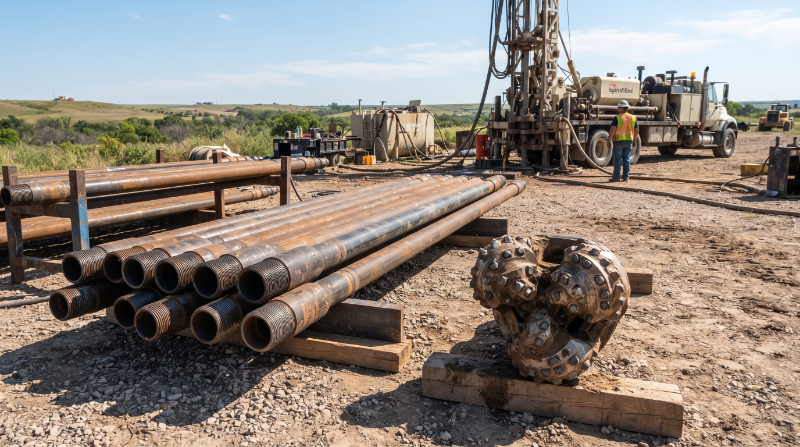
Pulling dead hardware is dangerous, heavy work. A 300-foot run of pipe completely full of water weighs over a thousand pounds. We back our hydraulic derrick trucks directly over the wellhead. We secure the T-handle into the pitless adapter, break the seal, and use raw hydraulic force to pull the pipe out smoothly.
As the pipe clears the surface, we inspect the entire run for wire chafing, calcification, and pipe degradation. Once the dead pump is removed, we splice a new commercial-grade stainless steel submersible pump onto the wire using waterproof, heat-shrink splice kits. We attach heavy rubber torque arrestors specifically positioned above the pump body to lock the unit in place and prevent future twisting. We lower the new iron back into the borehole, seat it aggressively into the pitless adapter, and fire the system to restore your pressure.
Execute the Repair NOW
You cannot negotiate with a dry well in the Arizona desert. When the water stops, you require a Licensed & Insured contractor who treats the outage like the emergency it is. We do not make excuses, and we do not delay.
Call Yuma Water Well Drilling at (928) 248-8305 IMMEDIATELY. We answer 24/7. We deploy our heavy trucks, diagnose the electrical or mechanical failure at the source, and rip the dead iron out of the ground to restore your water supply immediately.
Immediate 24-hour truck rolls across Yuma, Fortuna Foothills, Somerton & Dome Valley.
Emergency Outage FAQs
What do I do if I have no water from my well in Yuma?
Check your main breaker panel first. If the breaker is not tripped, you have a mechanical or electrical failure. Immediately call for emergency well repair to diagnose the surface control box or the submerged motor before heat damage destroys the remaining hardware.
Do you offer 24/7 pump failure emergency services?
Yes. We deploy specialized pump hoists and technicians around the clock across Yuma County, including Dome Valley and Somerton, to handle catastrophic water system failures.
Why did my well stop pumping water suddenly?
Sudden lack of water is usually caused by an electrical fault such as a blown start capacitor in the overheated pump house, a ruptured drop pipe bleeding pressure, or a dead short-to-ground in the motor windings down the borehole.