
Water Well Drilling Yuma AZ
When your well runs dry or your pump burns out in 115-degree heat, you don't have time for excuses. We punch holes through the tough Yuma Mesa and Colorado River basin to deliver reliable, high-yield water systems.
Request Site Evaluation or Service
Direct line to our service team. No sales fluff.
Water Well & Pump Services in Yuma, AZ
Well Drilling
Custom rotary drilling engineered for both Yuma Mesa hard-pan caliche and Yuma Valley alluvial formations.
Pump Repair
24/7 electrical diagnostic, control box replacement, and heavy deep-well submersible pump pulling.
Pressure Tanks
Bladder tank replacement, air-charge calibration, and short-cycling prevention to protect downhole motors.
Yield Testing
Flow rate and drawdown testing for agricultural, commercial, and residential well real estate inspections.
Diagnostic Reality on the Ground
Sand spitting through your faucets. A pressure switch chattering wildly in the pump house. A control box clicking but failing to turn over the motor. These are the hard realities of operating a water system in the harsh environment of Yuma, AZ 85364. When your system starts pulling air or your submersible pump shorts to ground, the clock is ticking. Livestock, crops, and your household cannot survive a prolonged water outage in 115-degree heat. You need a contractor who understands the mechanics of fluid dynamics, the electrical requirements of heavy-duty motors, and the exact geological strata beneath your boots.
We are Yuma Water Well Drilling. We do not deal in guesswork. We deal in load testing, hydrostatic pressure, and precise borehole engineering. When you call us for water well drilling Yuma AZ depends on, or for an emergency well pump extraction, we arrive with the heavy iron, the meters, and the technical expertise required to restore your water supply.
The Geology of Water Well Drilling Yuma AZ
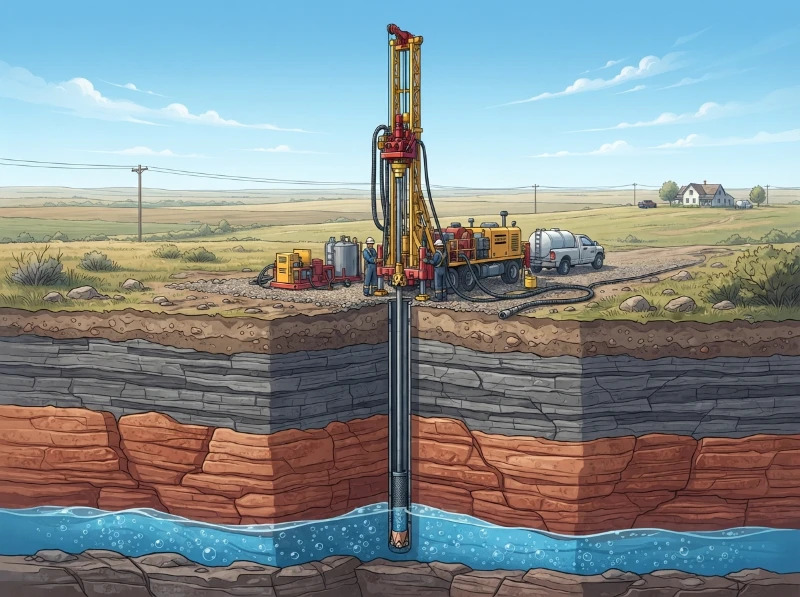
Drilling a well here requires adapting to extreme sub-surface variations. We operate heavily within the Colorado River basin and the elevated Yuma Mesa. These two geological zones demand entirely different drilling fluids, penetration rates, and casing strategies.
Yuma Valley Alluvial Formations
In the Yuma Valley, we hit massive, unconsolidated alluvial deposits. You have heavy layers of loose sand, gravel, and silt deposited by centuries of river movement. Drilling through this requires highly engineered drilling mud. If the bentonite viscosity isn't strictly controlled, the borehole walls will slough in, trapping the drill string and collapsing the hole before we even get the casing set. We continuously run Marsh funnel tests on our drilling fluid to ensure the mud weight is heavy enough to hold back the unstable formations while efficiently carrying the cuttings to the surface.
Yuma Mesa Hard-Pan & Caliche Layers
Moving up to the Yuma Mesa, the rules change. We encounter heavily cemented layers, hard pan, and calcified lenses that will destroy inferior drill bits. The average depth we push to in this region sits around 285 feet to secure a static water level that provides a reliable drawdown margin. Hitting an aquifer is only step one. Proper well design requires screening the specific water-bearing zones, accurately placing the filter pack, and sealing off upper contaminants with a strict annular sanitary grout.
Well Pump Repair Yuma: Surviving 115-Degree Heat
Most premature pump failures in our territory are environmental. When ambient temperatures hit 115 degrees, the surface-mounted electrical components take a brutal beating. Start capacitors swell and leak. Relays fuse shut. If your pump isn't moving water, we start our diagnostics at the control panel.
Our technicians hook up the multimeter and check incoming line voltage. A drop in voltage from the grid forces the motor to draw higher amperage to compensate, generating extreme heat that melts the windings inside the submersible motor down the hole. We test the amp draw and cross-reference it with the motor's nameplate rating. Next, we use a megohmmeter to "meg" the motor leads. This sends high voltage down the wires. If we get a reading of zero, the insulation on the wires has failed or the motor windings are burnt out, creating a dead short to ground. When that happens, the pump has to come up.
Pulling a pump from 285 feet requires mechanized pulling units. Hand-pulling poly pipe loaded with hundreds of pounds of water and a massive brass and steel pump unit is a recipe for injury and damaged equipment. We hook up our rig, latch onto the pitless adapter, and hoist the column out cleanly. We inspect every foot of the drop pipe for torque arrestor wear, wire chafing, and pipe chafing against the casing. Submersible pumps torque violently every time they kick on. If the pump wasn't properly centralized during the initial install, that torque eventually rubs a hole directly through the drop pipe, causing the pump to run continuously without building pressure at the surface.
The Drilling & Installation Workflow
For new installations, precision dictates the lifespan of the well. As experienced Yuma well drillers, our process is systematic and unforgiving of errors.
1. Pilot Hole and Logging
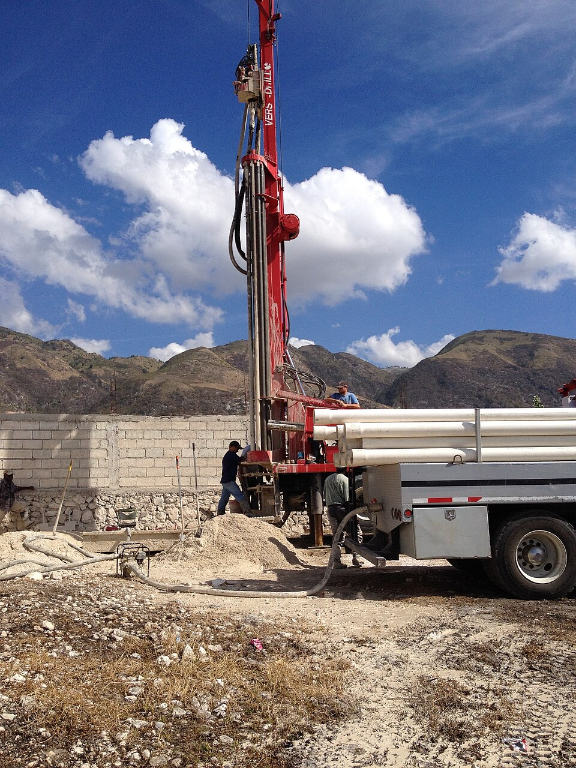
Phase 01We spud in and advance a pilot hole, capturing formation samples every ten feet. We log the exact depth of every clay lens, gravel bed, and sand intrusion. This log dictates exactly where we will place the solid casing and where we will set the factory-slotted screen.
2. Reaming and Casing
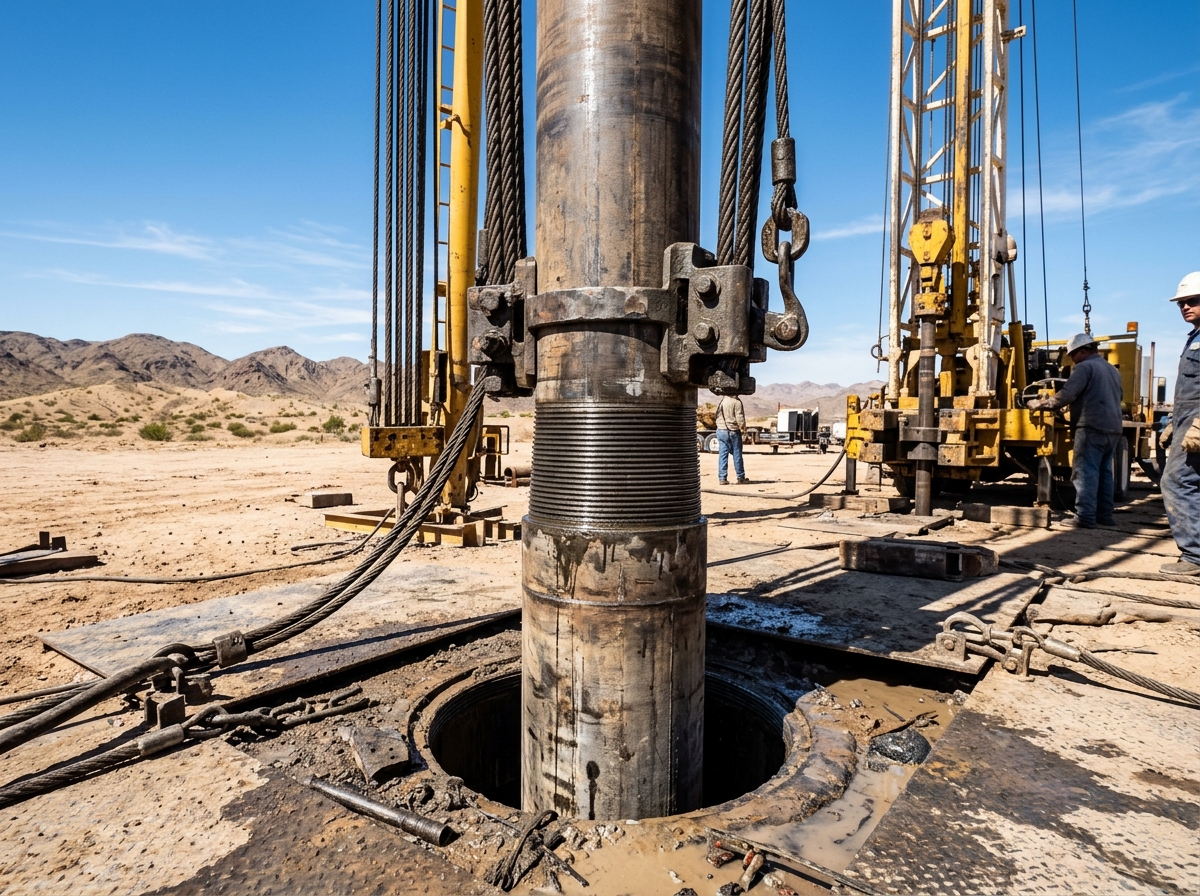
Phase 02Once the pilot hole confirms a viable aquifer, we trip back in with a larger reaming bit to open the borehole to the final diameter. We set SDR-17 or Schedule 80 PVC casing, or heavy-wall steel depending on the structural requirements. The well screen is positioned directly adjacent to the strongest water-bearing formations.
3. Gravel Packing
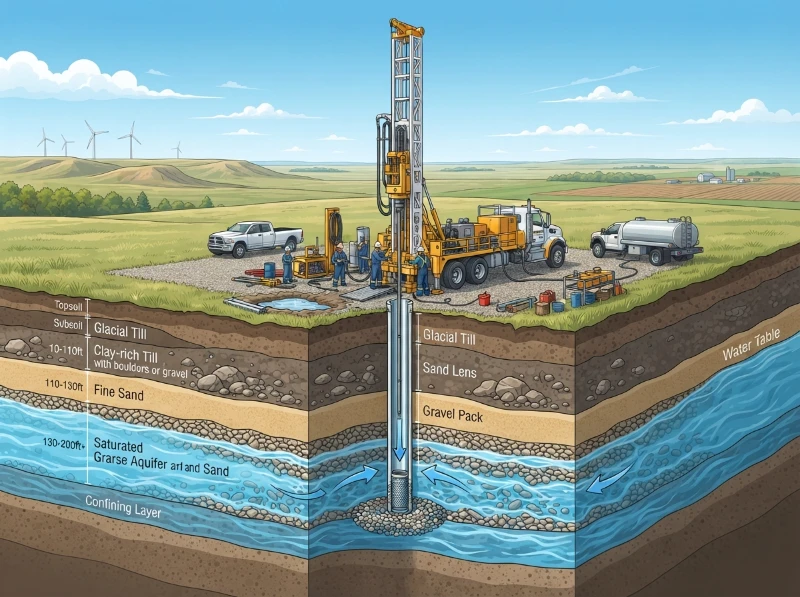
Phase 03A bare screen in the Colorado River basin will instantly clog with fine sand. We install a carefully graded silica sand gravel pack into the annular space between the borehole wall and the well screen. This acts as the primary filter, holding back the native formation while allowing clean water to flow freely into the pump chamber.
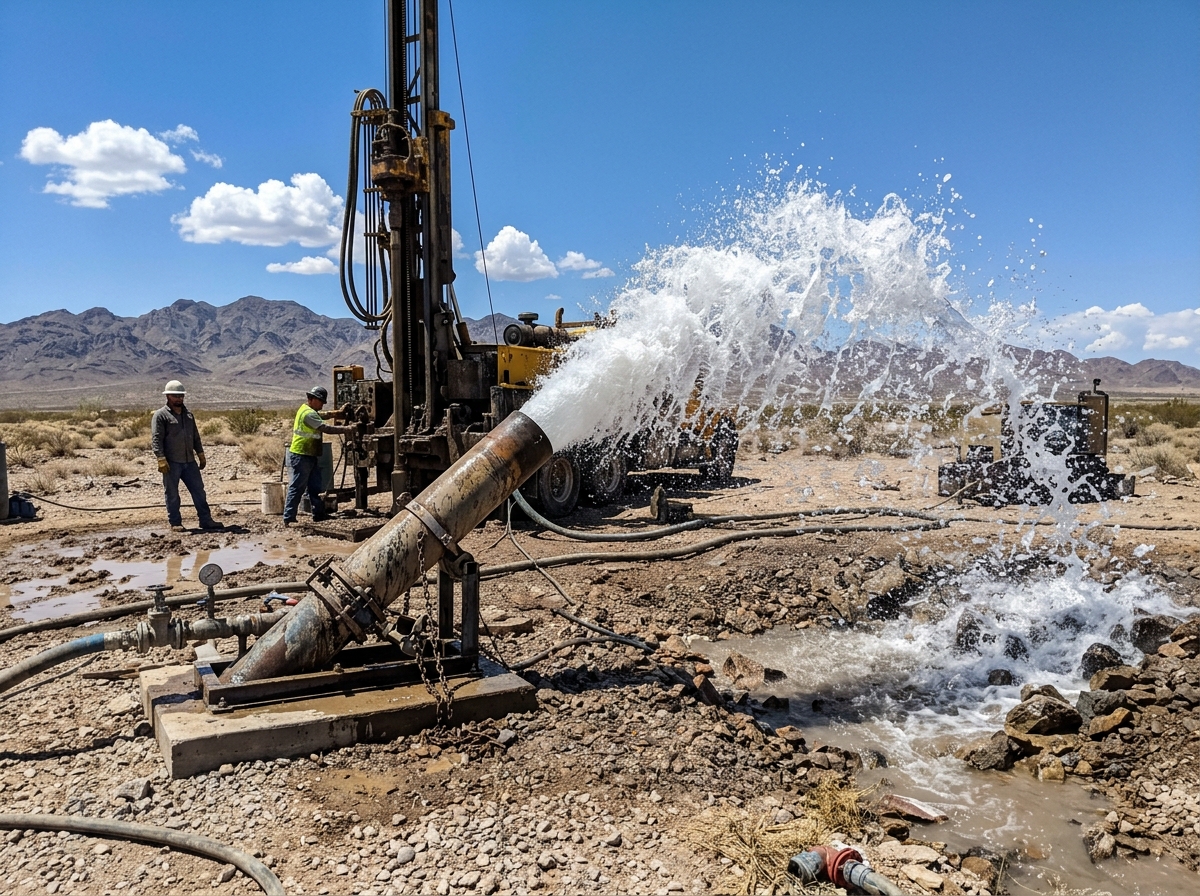
4. Surging and Development
Phase 04You cannot drop a pump into a freshly drilled well and walk away. The walls of the borehole are coated with drilling mud. We use surge blocks and high-pressure air compressors to violently agitate the water column, pulling the mud cake through the screen and blowing it out of the well. We air-lift the well until the discharge runs crystal clear and sand-free.
Pressure Tank and Surface Diagnostics
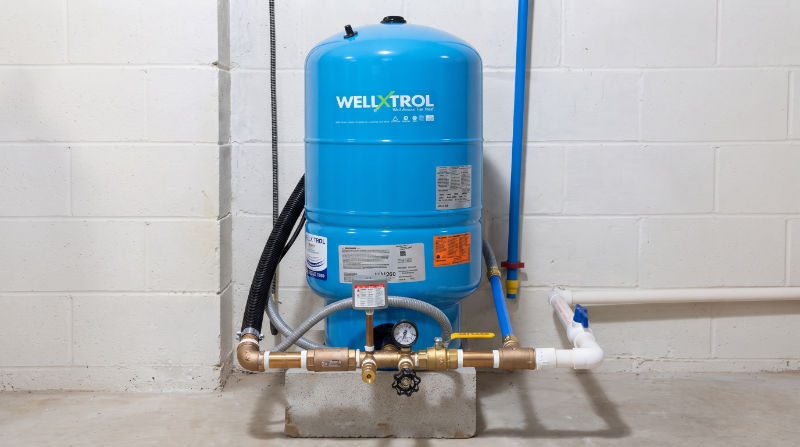
The pump down the hole is only half the machine. The pressure tank on the surface acts as the buffer. Inside that steel tank is a rubber bladder separating the air charge from the water. In the Yuma heat, these bladders degrade over time. If the bladder ruptures, the tank becomes "waterlogged."
A waterlogged tank has no compressed air cushion. Because water cannot be compressed, every time you open a faucet, the pressure drops instantly, forcing the pressure switch to slam shut and turn on the well pump. You shut the faucet, the pressure spikes instantly, and the pump shuts off. This rapid short-cycling will destroy a brand new submersible pump within weeks. Our technicians check the tank's pre-charge with a tire gauge. If water shoots out of the Schrader valve, the bladder is blown, and the tank must be ripped out and replaced immediately.
Yuma Water Well Diagnostics & FAQ
What is the average well depth in Yuma, AZ?
The average well depth in our region is around 285 feet, though this varies significantly depending on whether you are situated in the Yuma Valley or up on the Yuma Mesa.
Why is my well pump running but not building pressure?
This usually points to a worn pump impeller, a hole in the drop pipe below the static water level, or a failing check valve allowing water to bleed back down the borehole. Immediate diagnostics are required to prevent burning out the motor.
Do you provide emergency well pump repair in Yuma?
Yes. We operate a 24/7 emergency response for well pump repair across Yuma County, addressing burnt control boxes, dead submersible motors, and chattering pressure switches.
Service Areas and Emergency Response
Our heavy rigs and service trucks cover the entirety of the local agricultural and residential sectors. We provide water well drilling and pump repair across Yuma, Yuma Mesa, Yuma Valley, Fortuna Foothills, Somerton, San Luis, Wellton, and Dome Valley. We understand the specific hydrology of each sector. A pump pulled in Dome Valley will show different mineral scaling than a pump pulled on the Mesa. We carry the specific acid treatments, replacement screens, and high-horsepower motors needed to fix the problem on the first trip.
Do not wait for your system to fail entirely. If your water pressure is surging, if your pump is running longer than usual to satisfy the pressure switch, or if you are dealing with heavy sand intrusion, the system requires immediate intervention. Ignoring the symptoms leads to dry wells, burnt motors, and collapsed casings.
Call Yuma Water Well Drilling at (928) 248-8305. We deploy the right equipment, diagnose the mechanical failure at the source, and execute the repair with heavy-duty components built to survive the desert.
Ready to deploy rotary rigs and diagnostic units across Yuma County.