
Well Casing Repair Yuma
When your taps spit liquid mud and gravel, the structural integrity of your well is compromised. We deploy heavy rigs to stabilize breached pipes and execute casing collapse repairs in the shifting Yuma Valley soils before you lose the borehole entirely.
Stop the Borehole Collapse
Direct line to our service team. Immediate mechanical intervention.
The Physics of a Casing Breach
You flip the switch on your pump control box, and instead of clear water, a slurry of thick mud and abrasive sand blasts into your holding tank. The pressure gauge fluctuates violently. The motor groans under the extreme weight of the sediment. You are not dealing with a simple pump failure. The physical wall separating your clean drinking water from the native dirt has ruptured. When you need well casing repair Yuma property owners must understand they are racing against complete geological collapse.
A well casing is a highly stressed piece of infrastructure. It is a long column of PVC or steel buried hundreds of feet deep, constantly subjected to massive external hydrostatic pressures and the shifting weight of the earth. In the Yuma Valley, the sub-surface geology makes this an incredibly hostile environment. The valley sits on an ancient floodplain constructed entirely of unconsolidated alluvium—loose sand, silty loam, and aggressive river gravel. This earth is not stationary. Seismic vibrations, heavy agricultural irrigation, and massive equipment moving on the surface cause the soil to settle and shear. If an older casing cannot withstand that shearing force, it cracks, snaps, or completely caves in.
Corrosion and PVC Fatigue
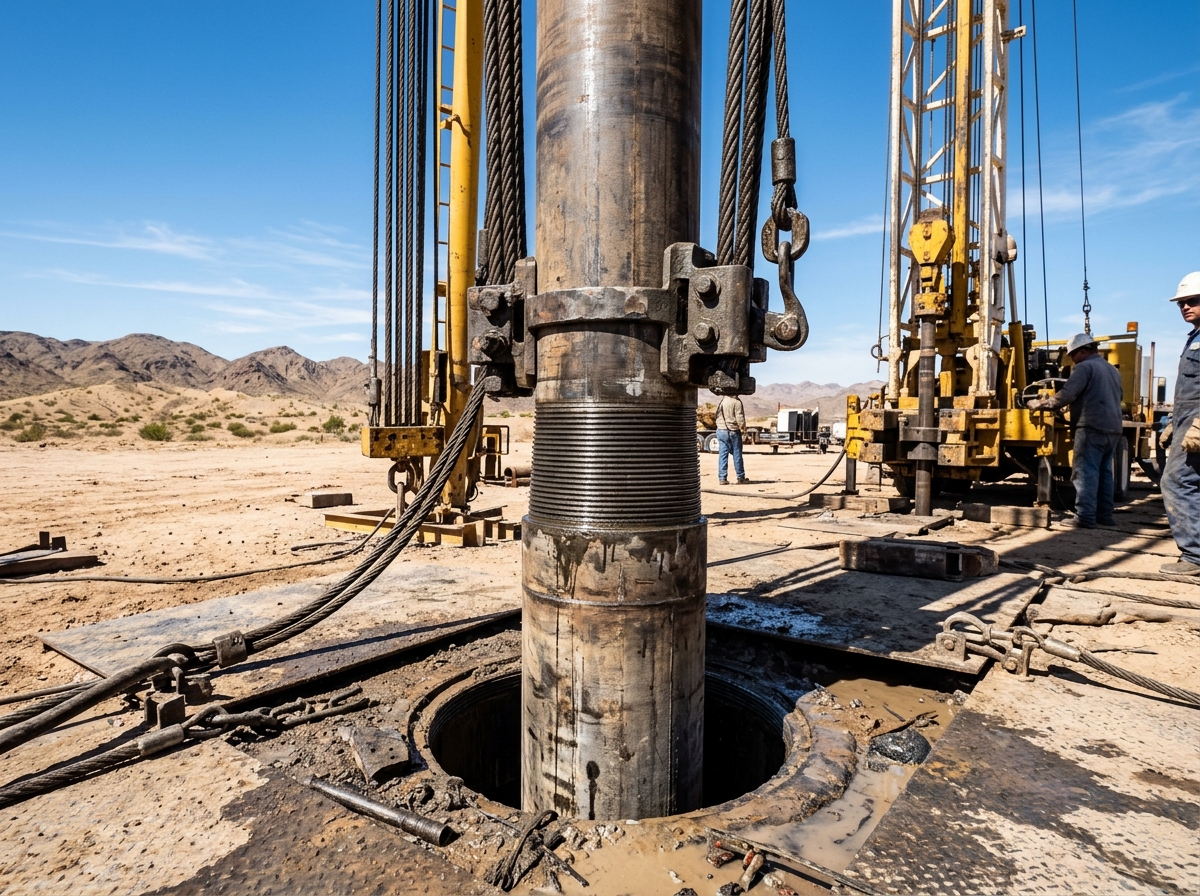
Breaches happen for two specific mechanical reasons depending on the age and material of your well.
Legacy Steel CorrosionGalvanic Rust
For legacy steel casings, the enemy is extreme corrosion. The groundwater in the Colorado River basin and the Yuma aquifers is heavily loaded with dissolved minerals. Decades of exposure to this hard water, combined with stray electrical currents in the ground, causes galvanic corrosion. The steel rusts from the outside in until a pinhole forms. The extreme pressure of the aquifer instantly exploits that pinhole, blasting a jet of muddy water and fine sand directly into your well column. That sand falls to the bottom, burying your pump and machining the brass impellers into dust.
PVC Structural FatiguePoint-Load Shearing
For PVC casings, the failure point is usually structural fatigue. PVC does not rust, but it can turn brittle over decades. If the original drilling contractor failed to properly install the gravel pack and annular seal, the loose cobbles in the Fortuna Foothills and Yuma Valley can rest directly against the plastic pipe. As the earth shifts, those rocks exert massive point-load pressure against the casing until it splinters or crushes inward. When this occurs, you face an immediate casing collapse repair emergency. If the collapse occurs above your submersible pump, the pipe will physically trap the motor in the hole.
Casing Collapse Repair: The Sleeving Protocol
When a casing breaches, abandoning the well and drilling a new one is the absolute last resort. If we intervene before the hole completely fills with mud, we can often salvage the infrastructure through a highly technical process known as sleeving.
We do not guess at the depth of the damage. We arrive with a pump hoist truck, extract your submersible pump, and deploy a high-resolution downhole camera. We drop the optics down the column to visually identify the exact depth, severity, and diameter of the breach. If you have an 8-inch or 6-inch casing that has cracked but not completely pancaked, we can pass a smaller pipe through it.
We calculate the required depth and cut a custom length of heavy-duty SDR-17 PVC liner. We lower this liner directly down the inside of your broken casing. The liner is positioned so that it completely covers the damaged section, acting as a physical patch. However, a liner alone is useless. We must seal the gap between the new inner liner and the old broken outer casing. To achieve this, we install a K-packer—a heavy brass or stainless steel fitting surrounded by aggressive rubber flanges. We force the K-packer down to the overlap point, where the rubber bites fiercely into the inner wall of the old casing and the outer wall of the new liner. This creates a watertight, impenetrable seal. The mud and native dirt are permanently locked out, and the well is forced to draw clean water exclusively from the undamaged screens below.
The Critical Annular Space Seal
Sometimes the casing itself is physically intact, but the well is still pumping heavily contaminated surface water. This indicates a catastrophic failure of the annular space seal.
When a rig drills a 10-inch hole to install a 6-inch casing, there is a 2-inch void entirely surrounding the pipe. This is the annular space. The Arizona Department of Water Resources (ADWR) strictly mandates that this space must be permanently sealed from the surface down to a minimum of 20 feet using a sanitary grout. If an amateur driller backfilled this space with loose dirt instead of proper grout, or if the original grout has dried and cracked in the Yuma heat, you have a direct superhighway for contamination.
Agricultural runoff from citrus groves, pesticides, fertilizers, and surface bacteria will channel straight down the outside of the casing and dump directly into your drinking water aquifer. Fixing this requires massive fluid engineering. We cannot just pour cement down the hole from the surface—it will instantly bridge off and leave massive air pockets.
We execute an annular space seal repair using tremie pipe injection. We force a small-diameter tremie pipe down the outside of your casing until it hits the bottom of the void. We hook the tremie pipe to a high-capacity mud pump and inject a calculated volume of neat cement or high-solids sodium bentonite grout. By pumping the grout from the bottom up, we physically displace all the contaminated water and trapped air, filling the void with a solid, impermeable column of concrete or clay. This locks out surface runoff and permanently restores the sanitary integrity of the wellhead.
Violent Air-Lifting and Well Rehabilitation
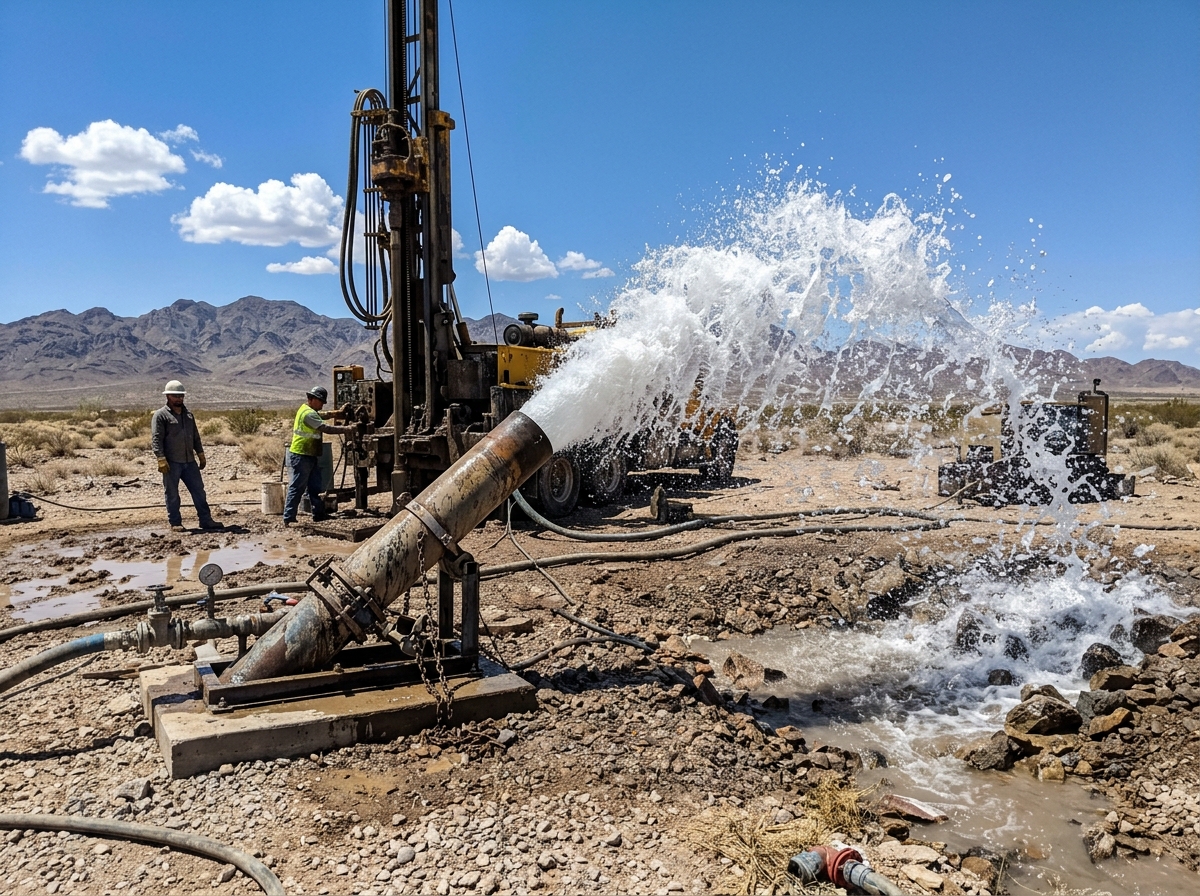
Once the casing is sleeved and the annular space is sealed, the repair is physically complete, but the water column is still heavily contaminated with the mud that entered during the initial breach. If we drop your pump back into that mud, it will destroy the impellers instantly.
We rehabilitate the borehole using extreme mechanical force. We lower an airline down to the bottom of the casing and hook it to a massive industrial air compressor. We inject high-pressure air directly into the water column, violently blowing the mud, sand, and accumulated sludge straight out the top of the wellhead. This air-lifting process acts like a subterranean geyser. We continue to surge and lift the well until the discharge runs crystal clear. Only then do we reinstall the submersible pump, verify the amp draw, and return the system to service.
Demand Heavy-Duty Intervention
A casing breach does not fix itself, and running a pump in a collapsing hole guarantees you will destroy the motor and lose the well entirely. When the earth starts bleeding into your water supply, you need a Licensed & Insured contractor equipped to handle catastrophic structural failures in unstable soils.
Call Yuma Water Well Drilling at (928) 248-8305 before a casing breach ruins the water supply. We deploy the pump hoists, deploy the downhole optics, and execute the heavy-duty sleeving and grouting required to save your infrastructure.
SDR-17 PVC sleeving, K-packer seals, and pressure tremie grouting units.
Well Casing Repair FAQs
How do you know if your well casing is cracked or collapsed?
A breached casing typically presents as a sudden, heavy influx of mud, sand, or gravel entering your plumbing system. You may also experience a stuck submersible pump that cannot be pulled to the surface, indicating the pipe has physically collapsed around the equipment.
Can you perform a casing collapse repair without drilling a new well?
If the collapse is caught early enough and the original casing diameter is large enough, we can execute a casing collapse repair by installing a smaller-diameter PVC liner (sleeving) past the damaged section and sealing the overlap to lock out the native dirt.
What is an annular space seal?
The annular space seal is a mandatory barrier of high-solids bentonite grout or neat cement pumped into the void between the outside of the casing and the native dirt. It prevents surface water, agricultural chemicals, and bacteria from traveling down the outside of the pipe into the aquifer.