
Well Abandonment Services Yuma
An open, unused well is a massive legal and environmental liability. We execute heavy-duty pressure grouting and strict ADWR compliance to permanently seal dead boreholes and eliminate your groundwater liability.
Schedule Legal Decommissioning
Direct line to our service team. State compliance filings included.
The Liability of a Dead Hole
A rusted 8-inch steel pipe sticking out of the dirt on your property is not just an eyesore. It is a direct, unmitigated conduit from the surface straight down into the primary drinking water aquifer. If you have a well that has run dry, a collapsed casing you walked away from, or an old agricultural bore in Somerton that was replaced by a modern irrigation system, you own a massive environmental and legal liability. You cannot simply throw a sheet of plywood over the casing or kick dirt down the hole and consider the job done. In the State of Arizona, groundwater is fiercely protected by law.
When an open casing degrades, it invites disaster. Agricultural runoff loaded with nitrates and pesticides from Yuma Valley fields will channel directly down the pipe. Floodwaters carrying surface bacteria will pour into the aquifer. Worse, an open 16-inch or 24-inch agricultural casing presents an extreme physical hazard to livestock, equipment, and people. Providing professional well abandonment services Yuma property owners require means executing heavy mechanical sealing procedures that permanently destroy the well's ability to act as a conduit. We remove the hazard, protect the aquifer, and pull the liability off your deed.
The Legal Mandate: A.A.C. R12-15-816
The Arizona Department of Water Resources (ADWR) does not view well abandonment as an optional property upgrade. It is a strict legal mandate. Under the Arizona Administrative Code (A.A.C.) R12-15-816, if a well is no longer being used, is in such a state of disrepair that it threatens the groundwater, or has been replaced by a new system, it must be officially abandoned according to rigid state engineering standards.
Failure to comply with these statutes invites heavy fines from ADWR and halts real estate transactions instantly. If an inspector identifies an illegal, open well on your Yuma Mesa or Fortuna Foothills property during a sale, the closing freezes. To properly decommission well Arizona properties, you must hire a Licensed & Insured contractor equipped with the heavy mud pumps and grouting machinery required to meet state spec. We handle the paperwork, execute the mechanical destruction of the borehole, and file the final abandonment report with ADWR to legally clear your property.
The Threat of Amateurs: Why Dirt Fails
The most common mistake property owners make is attempting to fill a dry well themselves. Dropping a loader bucket full of gravel or native dirt down a 300-foot casing is a guaranteed failure. When dry material falls down a deep, narrow pipe, it inevitably hits a wet spot or a slight bend in the casing and jams. This is called "bridging."
A bridge creates a solid plug maybe forty feet down, making the well look completely filled from the surface. In reality, there are 260 feet of empty, highly pressurized void directly beneath that dirt plug. Eventually, the hydrostatic pressure of the earth or the weight of surface water causes that dirt bridge to collapse violently. The ground caves in, creating a massive sinkhole around the wellhead. The only way to prevent this and legally seal the hole is through pressure grouting using liquid cement.
The Mechanical Execution of Decommissioning
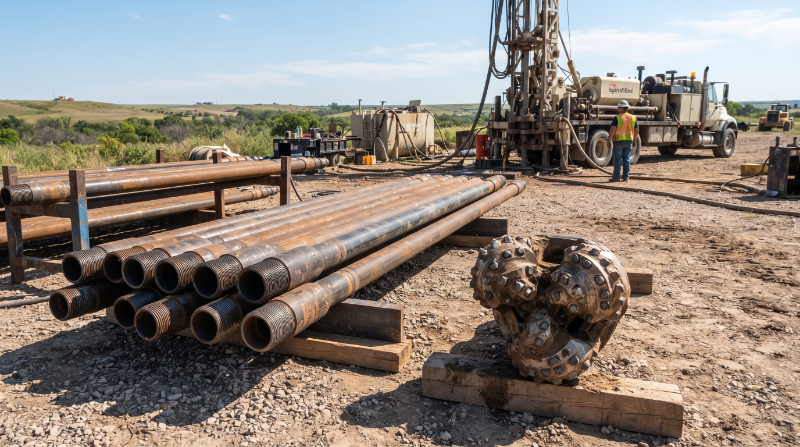
Legally destroying a water well is a highly technical, sequential process. We do not skip steps. We mobilize our hydraulic rigs, our grout plants, and our welding equipment to execute the abandonment precisely by the book.
1Borehole Clearance
We cannot pump cement into a well filled with garbage. We deploy our pump hoists to extract any remaining drop pipe, wire, or dead submersible pumps stuck in the casing. If the well was used as a trash dump over the years, we run a drill bit down the column to chew up the debris or use wireline tools to fish out obstructions. The borehole must be physically clear from the surface all the way down to the original total depth.
2Tremie Pipe Grouting
This is the core of the A.A.C. R12-15-816 requirement. We do not pour concrete down from the top. We lower a small-diameter PVC or steel tremie pipe entirely down the casing until it touches the absolute bottom of the well. We connect the surface end of the tremie pipe to a high-capacity triplex mud pump and a grout mixing plant.
We pump a highly engineered slurry of neat cement or high-solids sodium bentonite directly into the bottom of the well. As the heavy grout fills the hole from the bottom up, it forces all the standing water, air pockets, and contaminants out of the top of the casing. We continue pumping under immense pressure until pure, uncontaminated cement spills out onto the surface. This ensures there are absolutely zero voids, zero bridges, and a continuous, rock-solid column of impermeable material locking out the aquifer forever.
3Capping Old Water Well Casings

Once the grout column cures and settles, we address the surface hazard. We excavate a massive hole around the steel or PVC casing, digging down well below the frost line and standard grade level. We use a plasma cutter or heavy mechanical saws to cut the casing off entirely, removing the top section from the ground.
If we are capping old water well casings made of steel, we weld a heavy 1/4-inch steel plate directly over the cut pipe. For PVC, we install a heavy-duty, solvent-welded watertight cap. Once the casing is permanently sealed, we backfill the excavation site, grade the native dirt flat, and completely erase the footprint of the well from your property. A tractor or heavy machinery can now drive directly over the location with zero risk of collapse.
Protecting Yuma County from the Ground Down
We cover the entirety of the local region, from the heavy irrigation systems in Dome Valley to the domestic exempt wells drying up in San Luis and Wellton. Every abandoned hole in the ground puts the entire regional water supply at risk. When we grout a well, we do it with the heavy iron and the exact chemical mixtures required to survive the shifting geology of the Colorado River basin.
Do not let a dead well hold your property hostage or invite ADWR fines. Stop risking aquifer contamination and sinkholes. We supply the grout plants, the tremie pipe, and the legal documentation required to end the liability permanently.
Call (928) 248-8305 for legally compliant ADWR well decommissioning. We deploy the machinery, execute the pressure grout, cut the casing below grade, and submit the state paperwork to clear your deed.
Turnkey A.A.C. R12-15-816 state reporting, tremie pressure grouting, and below-grade capping.
Well Abandonment FAQs
What is the legal requirement to abandon a well in Arizona?
Under A.A.C. R12-15-816, any well that is structurally compromised, dry, or no longer intended for use must be legally abandoned. This involves clearing the borehole and pumping a continuous column of cement or bentonite grout from the bottom to the surface.
Can I just fill my old well with dirt?
Absolutely not. Shoveling dirt or gravel down a casing causes "bridging," where the material jams partway down, leaving massive empty voids. This is an ADWR violation. The well must be pressure grouted by a professional.
How do you handle capping old water well casings?
After the borehole is fully grouted, we excavate the area around the wellhead, cut the steel or PVC casing off completely below ground level, weld or attach a permanent watertight cap, and backfill the area to remove all surface hazards.